
Knowing your pet’s lymph nodes’ “normal”- where they are, what they feel like, and what changes in size or texture might indicate- puts you miles ahead of catching problems early. Lymph nodes are positioned throughout the body as checkpoints for the immune system. When they enlarge, it usually means the immune system is responding to something nearby. Whether that something is an infection, an injury, or a more systemic condition like a virus or cancer varies widely, and the location and character of the swelling offers important clues.
Village Animal Hospital is an AAHA-accredited independent practice in Wichita, meaning we don’t apply corporate-style, one-size-fits-all medicine to your pet. Our diagnostics include the testing needed to find the cause of the problem, and we take the time during every appointment to walk through what we find with you so you understand what is happening with your pet. Request an appointment if you have found a lump or noticed something different, and we’ll figure it out together.
Quick Facts
- A single firm lump near a wound, skin lesion, or infected tooth usually points to a local infection; multiple firm, painless lumps appearing together in an otherwise well dog raise concern for lymphoma; nodes enlarged across the entire body point to something systemic.
- Fine-needle aspiration is the first test we reach for in most cases because it is quick, well-tolerated, and produces a clear answer without sedation in the majority of pets.
- Kansas weather extends tick activity well beyond traditional summer months, and blastomycosis is endemic in the Midwest near wooded areas and waterways, which keeps tick-borne and fungal diseases on our regional differential list year-round.
- Treatment is matched to the underlying cause and not to the swelling itself, which is why getting the diagnosis right comes before starting medications.
What Does a Normal Lymph Node Feel Like and What Should Worry Me?
Lymph nodes are small, pea-shaped to bean-shaped immune checkpoints scattered throughout the body. Fluid from nearby tissue drains through them on its way back to the bloodstream, and immune cells inside each node screen that fluid for anything harmful. When everything is normal, lymph nodes are soft, small, and essentially impossible to feel from the outside. Enlargement is the body’s way of signaling that something has caught the immune system’s attention.
You can feel several of them at home once you know where to look. The accessible ones are:
- Submandibular nodes: under the jaw on either side, just behind the jawbone
- Popliteal nodes: behind each knee, in the soft tissue at the back of the joint
- Inguinal nodes: in the groin where the inner thigh meets the abdomen
- Axillary nodes: in the armpits, tucked deep between the body wall and the upper foreleg
- Prescapular nodes: in front of the shoulders, at the junction between neck and chest
What raises concern is not so much the presence of a lump as the character of it. Painful, warm lumps usually point to active infection or inflammation. Firm, fixed lumps that do not move easily under the skin raise more concern than soft, mobile ones. Lumps that grow over days are different from lumps that have been there unchanged for months. And lumps that appear in multiple locations simultaneously are a different category of finding altogether.
Routine wellness care visits include lymph node palpation at every exam, which is part of why annual or twice-yearly checkups matter even when your pet seems perfectly healthy. Our team builds a sense of what your pet’s nodes feel like at baseline, making subtle changes easier to catch the next time around. We’re happy to show you where they are- just ask us at your next visit.
When Should I Get This Checked Right Away Versus Schedule Something?
The right timing depends less on the lump itself and more on everything else happening with your pet. A small bump on a dog who is eating, playing, and feeling fine is a different scenario from the same bump on a dog who is lethargic, off food, or running a fever. Three rough urgency tiers cover most situations:
- Same-day emergency: severe lymph node enlargement combined with respiratory distress, sudden severe lethargy with multiple enlarged nodes, fever and systemic illness, or any other concerning combination of symptoms.
- Within 48 hours: new lymph node enlargement that is significant in size, multiple enlarged nodes without an obvious cause, persistent enlargement that has not resolved over several days, or any node change in a pet who is also showing systemic signs like decreased appetite, weight loss, or lethargy.
- Scheduled within the week: gradually noticed minor changes, mild enlargement that may correlate with a recent minor wound or known issue, or a follow-up to confirm resolution after treatment.
If you are uncertain which tier applies, call our team and we will help you triage based on what you are seeing. We’re able to take patients for emergency visits during our regular hours.
What Is Most Likely Causing My Pet’s Swollen Lymph Node?
The single most useful piece of information for narrowing down the cause is the pattern of involvement: how many nodes are enlarged, and which ones. The same medical conditions tend to produce predictable patterns, which is why we ask owners to describe not just where the lump is but whether any others feel different too.
When Only One Node Is Enlarged
A single swollen lymph node almost always reflects a local process draining to that node. The most common culprits:
- A skin wound, abscess, or insect bite in the area the node drains
- An infected tooth or oral inflammation (causing submandibular enlargement)
- An ear infection (causing prescapular or submandibular enlargement)
- A foreign body lodged under the skin
- A local mass or tumor
- Recent vaccination can occasionally cause localized lymph node swelling for a few days to a couple of weeks afterward
Single-node enlargement near a recent wound or visible skin problem often resolves on its own once the local issue is addressed. Single-node enlargement with no obvious local cause warrants evaluation to identify what the node is reacting to.
When Several Nodes in One Region Are Enlarged
Multiple enlarged nodes clustered in one body region suggest a more diffuse process in that area, often a regional infection or sometimes regional cancer spread. Severe allergies with secondary skin infections, particularly atopic dermatitis affecting an entire area, can produce reactive enlargement of all the nodes draining the affected skin. Cancers like mast cell tumors, mammary cancer, and oral cancer can spread to regional nodes before becoming generalized, which is part of why thorough diagnosis of cancer in pets often warrants lymph node evaluation as part of staging.
When Multiple Nodes Across the Body Are Enlarged
Generalized lymphadenopathy, meaning nodes enlarged across multiple body regions simultaneously, almost always reflects a systemic process. The major categories to work through:
- Tick-borne diseases are at the top of the list in Kansas because our climate extends tick activity well past traditional summer months. Lyme disease, ehrlichia and anaplasma, and related infections can produce generalized lymphadenopathy alongside fever, lethargy, and joint pain.
- Bacterial infections including leptospirosis, which dogs pick up through contaminated water or contact with wildlife, can cause systemic illness with lymph node involvement. Mycobacteriosis is a less common but important cause in cats, especially outdoor ones.
- Fungal disease is particularly relevant in our region. Fungal disease workups become a priority when persistent lymphadenopathy is paired with respiratory or systemic signs. Blastomycosis is endemic in the Midwest, particularly in dogs spending time near wooded areas and waterways. Histoplasmosis is also common across the region. Aspergillosis is another fungal possibility. Valley Fever primarily affects pets in the desert Southwest but does turn up in pets that have traveled.
- Viral diseases in cats like feline leukemia virus (FeLV) and feline immunodeficiency virus (FIV) can cause persistent lymphadenopathy among other systemic effects.
- Parasitic causes include toxoplasmosis in cats, heavy intestinal parasite burdens, giardia, and significant external parasite loads.
- Immune-mediated conditions including immune-mediated hemolytic anemia can produce lymph node changes alongside their primary effects.
The category that demands the closest attention is cancer, which deserves its own discussion.
Could It Be Lymphoma, and What Would That Look Like?
Canine lymphoma is the cancer most strongly associated with sudden, dramatic lymph node enlargement in dogs. The classic presentation catches families off guard: multiple firm, non-painful lymph nodes that grow noticeably over days to weeks, in a dog who is otherwise eating, playing, and behaving completely normally. The mismatch between how the dog feels and how the nodes look is part of what makes lymphoma so easy to miss until it is well-established.
The numbers help frame why we take this differential seriously. An estimated 1 in 15 dogs born today will develop lymphoma at some point in life, and that risk rises to roughly 1 in 8 for Golden Retrievers specifically. Newer blood-based screening tests can detect lymphoma signals in the blood months before visible nodes appear, giving families more time to plan treatment and consider options.
Lymphoma diagnosis and subtype shape the entire treatment conversation. B-cell lymphoma, T-cell lymphoma, indolent forms, and aggressive forms all have different prognoses and respond differently to treatment, which is why simply knowing “your dog has lymphoma” is not enough information to plan care. Subtyping matters.
Feline lymphoma presents differently than the canine version. Most feline lymphoma is gastrointestinal rather than nodal, showing up as chronic vomiting, weight loss, or appetite changes rather than as visible swelling. Some feline lymphomas do involve external nodes, and some involve only abdominal nodes that require palpation or imaging to detect.
Remission is the realistic goal for most lymphoma patients, not cure. Treatment can extend both lifespan and quality of life substantially, but the underlying disease is not typically eliminated. Honest conversations about what treatment looks like for each individual pet, including expected duration, side effects, monitoring requirements, and costs, are part of how we help families decide how they want to proceed.
What Will the Visit Look Like When I Bring My Pet In?
The first part of the appointment is the conversation. We will ask when you first noticed the lump, whether it has changed, what other pets in the home are doing, what your pet’s recent diet and parasite prevention look like, and whether you have noticed any other changes like decreased appetite, weight loss, or behavioral shifts. That history shapes which tests we recommend first.
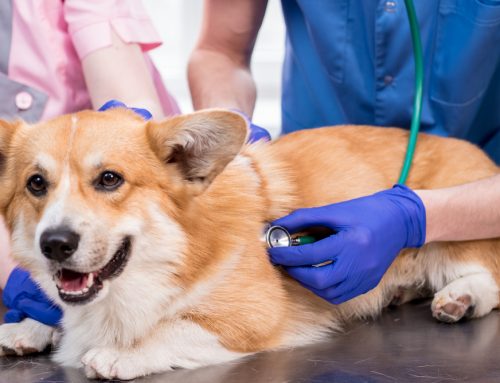
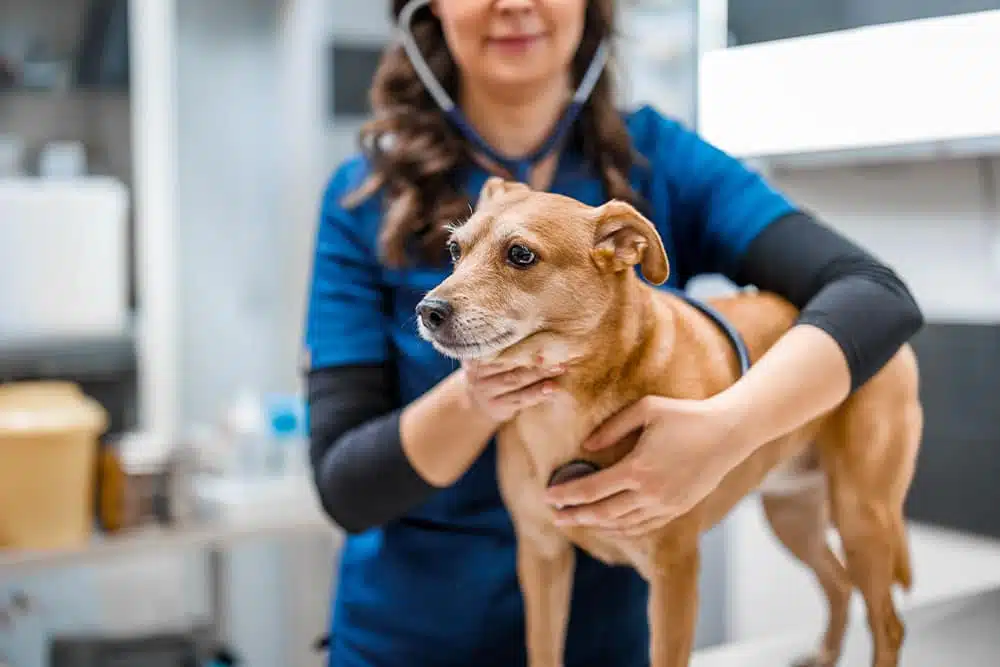
Then comes the physical exam. We feel every accessible lymph node on your pet’s body, not just the one you noticed, and assess each one for size, texture (soft versus firm versus hard), consistency (uniform versus nodular), symmetry, tenderness, and whether the node moves freely or feels fixed in place. This is where the pattern we discussed above starts to emerge: is it one node, several in one area, or multiple across the body?
The most useful next step in most cases is fine-needle aspiration (FNA). A small needle collects cells from the enlarged node for microscopic evaluation. The procedure is brief, minimally invasive, and most pets handle it about as well as a vaccine, often without any sedation needed. Cytology results often answer the question: is this a reactive node, an infected node, or a cancerous node? In many lymphoma cases, FNA produces a presumptive diagnosis on its own.
When FNA does not give a definitive answer, or when lymphoma subtyping is needed to plan chemotherapy, a biopsy becomes the next step. Biopsy preserves the full tissue architecture of the node rather than just sampling individual cells, which is what some diagnoses require.
Depending on what the exam and aspirate show, we usually add:
- Complete blood count and chemistry panel to screen for systemic infection, anemia, organ disease, and immune dysregulation
- Tick-borne disease testing when exposure history and seasonal timing suggest it
- Infectious disease testing for FeLV/FIV, fungal serology, or leptospirosis as appropriate
- Urinalysis for kidney function and other systemic markers
- Chest radiographs for thoracic nodes and pulmonary involvement
- Abdominal ultrasound for internal nodes and organ evaluation
Our in-house laboratory returns most of these results during the same visit, which means we can often move from “I am not sure what this is” to “here is what we are dealing with and here is the plan” on the same day. If biopsy is needed, we are able to perform surgical biopsies in our hospital and send the samples to our reference laboratory partner.
How Do We Treat the Underlying Cause?
There is no single treatment for lymph node swelling because the swelling itself is the body’s response, not the disease. Treatment is always aimed at the underlying cause once it is identified. The main approaches:
- Bacterial infections: targeted antibiotics, guided by culture and sensitivity when feasible
- Tick-borne diseases: doxycycline or other targeted antibiotics, often for several weeks
- Fungal infections: antifungal medications, typically for months
- Viral infections in cats: supportive care focused on secondary effects
- Parasitic infections: antiparasitic medications and concurrent management of complications
- Allergic and atopic disease: allergy treatment and management of any secondary skin infections
- Lymphoma: chemotherapy protocols matched to the specific subtype, often with referral to veterinary oncology for complex cases
- Other cancers: surgery, chemotherapy, radiation, or combinations depending on diagnosis and stage
- Immune-mediated conditions: immunosuppressive medications
What Can I Do to Prevent Lymph Node Problems in the First Place?
Not every cause of lymphadenopathy is preventable, but several major contributors are, and consistent preventive care is also the most reliable way to catch the unpreventable causes early.
- Vaccinations and preventive care through our wellness care services protect against many of the viral and bacterial infections that drive lymphadenopathy. Core vaccines plus regional considerations like leptospirosis vaccination in dogs with appropriate exposure and FeLV vaccination for at-risk cats add meaningful protection. Our passion for education ensures you leave each visit with clear, individualized prevention guidance for your specific pet.
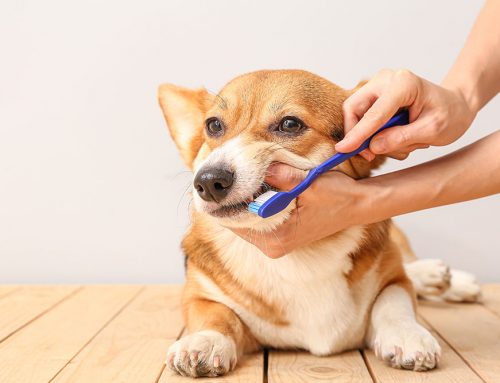
- Dental care is one of the most underappreciated preventive measures because chronic oral bacterial load constantly activates the lymph nodes draining the mouth and throat. Pets with significant periodontal disease frequently have palpably enlarged submandibular nodes that resolve once we address the dental disease. Our dental services include ultrasonic scaling above and below the gumline, full-mouth dental radiography to identify problems hidden under the gums, and a permanent dental chart that tracks findings visit over visit.
- Year-round parasite prevention addresses tick-borne disease risk, intestinal parasite exposure, and external parasite control. Seasonal coverage tends to leave gaps that Kansas weather rewards with exactly the exposures we are trying to prevent.
As an AAHA-accredited practice, our preventive care protocols meet the standards developed by the American Animal Hospital Association, meaning your pet will receive the highest quality of medical care.
Frequently Asked Questions About Swollen Lymph Nodes in Pets
My dog has one enlarged lymph node but seems fine. Can I wait?
A single enlarged node in an otherwise well dog often does have a benign explanation, but the only way to know for sure is evaluation. If something serious is driving the change, earlier diagnosis means more treatment options remain available.
How fast does lymphoma progress?
Untreated canine lymphoma typically progresses over weeks to a few months, with most untreated dogs surviving only 1 to 2 months from diagnosis. Treated lymphoma can produce remissions of months to years, depending on subtype and individual response. Time matters for treatment outcomes.
Can I drain or pop a swollen lymph node at home?
No. Lymph nodes should never be drained or punctured at home regardless of cause. Even infectious causes should not be addressed by home drainage; the risk of spreading bacteria and worsening the situation is real.
Are swollen lymph nodes painful?
It depends on the cause. Inflammatory and infectious causes often produce tender or warm nodes. Cancer (lymphoma especially) typically produces non-painful enlargement, which is part of why families often do not notice these nodes until they have already become quite large.
My cat has had enlarged nodes for months but tests have been normal. What now?
Persistent unexplained lymphadenopathy is worth investigating further. Repeat aspiration, biopsy, additional infectious disease testing, or imaging may all be reasonable next steps depending on the case.
Getting Real Answers When You Find a Lump on Your Pet
The hardest part of finding a lump on your pet is the period of not knowing what it means. A systematic diagnostic process turns that uncertainty into a clear answer and a clear plan, regardless of where the answer lands on the spectrum of possible causes. The earlier the evaluation, the more options stay on the table.
If you have found a swollen lymph node on your pet in Wichita, request an appointment at Village Animal Hospital. We will work through the evaluation together, explain what we find, and make sure you leave with a clear understanding of what comes next.