
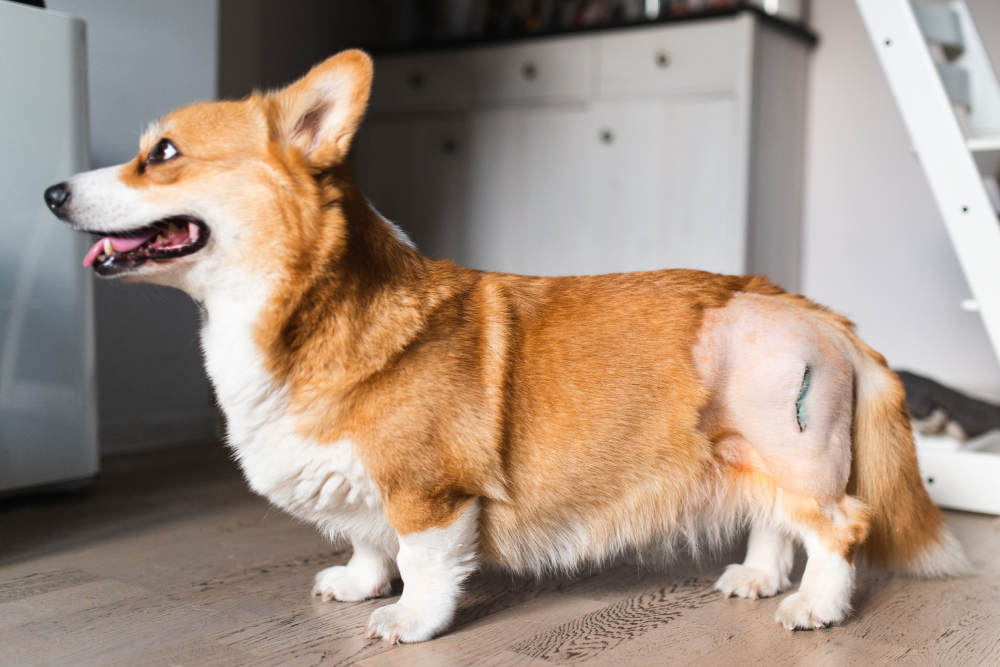
A dog suddenly holding a back leg up, or slowly losing ground on a limp that won’t quit, is showing signs that line up with a torn cranial cruciate ligament, one of the most common orthopedic injuries we see in dogs. The CCL is the main stabilizing structure inside the knee, and when it fails, the joint shifts in ways the surrounding muscle and tissue cannot make up for. In most dogs the ligament weakens gradually before it tears, which means by the time the limp shows up the joint has often been compromised for a while and early arthritis is already forming. Getting an accurate diagnosis is the first step, and from there the right path depends on your dog’s size, the degree of the tear, and other factors we’ll walk through with you.
Catching a CCL injury early changes what your dog’s long-term mobility looks like, and that starts with a careful workup. Village Animal Hospital in Wichita uses in-house bloodwork and digital radiography to evaluate joint changes and check your dog’s overall health before any decisions are made, and we walk you through what we see at every step. When you’re ready to bring your dog in, schedule a visit and we’ll get you on the books.
CCL Injury Care Essentials
- Most CCL tears in dogs reflect gradual ligament degeneration; a sudden lameness often uncovers a problem that has been building for weeks.
- Conservative management rarely produces good outcomes for medium, large, or giant breeds; most need surgical correction.
- Roughly 40-60% of dogs who tear one CCL tear the other within 1-2 years; weight management lowers the risk.
- AAHA-accredited diagnostic standards mean the imaging and bloodwork supporting your dog’s evaluation meet defined quality benchmarks.
The CCL Care Roadmap
From the first limp to a comfortable return to activity, CCL care follows a recognizable path, and knowing the stages helps you make calm decisions at each one.
| Stage | What it involves | What you can expect |
| Recognize | A limp, sitting with the leg out, or stiffness after rest | A reason to have the knee checked |
| Diagnose | Orthopedic exam plus X-rays | Confirmation of the tear and any arthritis |
| Decide | Conservative vs surgical, by size, age, and activity | A plan chosen with your veterinarian |
| Recover | Rest, rehabilitation, and a gradual return | The stage that most determines the outcome |
What Is a CCL Injury, and What Raises the Risk?
The cranial cruciate ligament (CCL) is the canine equivalent of the human ACL. It runs diagonally inside the stifle joint and keeps the tibia from sliding forward against the femur with every step. When it fails, the joint becomes mechanically unstable, and every step produces abnormal motion that wears down cartilage and speeds up arthritis.
A canine cruciate ligament injury usually doesn’t happen the way it does in human athletes. While people typically tear an ACL from a single traumatic moment, dogs more often have a ligament that’s been weakening for months. The fibers gradually degenerate until enough of them fail that the joint becomes unstable.
A few specific factors push that degeneration along and raise the odds of an eventual tear:
- Breed predisposition: Labrador Retrievers, Rottweilers, Newfoundlands, Boxers, Bullmastiffs, German Shepherds, and several others have higher rates of CCL disease.
- Body weight: excess weight dramatically increases stress on the CCL.
- Conformation: a steeper tibial plateau angle increases the shear force the ligament must resist.
- Activity patterns: weekend-warrior dogs (low activity during the week, intense bursts on weekends) are at higher risk than dogs with consistent moderate exercise.
- Reproductive status and age: spayed females have somewhat higher CCL injury rates than intact females in some studies.
When one CCL fails, the risk to the opposite knee climbs substantially. Roughly 40 to 60 percent of dogs who tear one CCL tear the other within 1 to 2 years, in part because the opposite leg has been carrying extra weight while the injured side compensates. Weight management, controlled conditioning, and avoiding high-impact weekend-warrior patterns all reduce that risk. We build weight management into wellness care tailored to individual dogs and lifestyles.
What Are the Signs of a Torn CCL?
The pattern your dog shows depends on whether the tear is partial or complete, and the gradual version is the easier one to miss. Some dogs go from fine to non-weight-bearing in a single moment; others develop an on-and-off limp over weeks that has you second-guessing what you’re seeing. Watching for the cluster of signs below over a few days is more useful than waiting for one dramatic symptom.
- Sudden onset complete tear: a dog who was fine and then suddenly will not bear weight on a hind leg, often holding the leg up entirely.
- Gradual onset partial tear: intermittent limping that improves with rest and comes back with activity. This is the more common presentation and the easier one to miss.
- Activity-related stiffness: stiffness after exercise that loosens up with movement, then returns.
- Postural shifts when sitting: dogs with CCL injury often sit with the affected leg out to the side rather than tucked under.
- Difficulty with everyday movements: reluctance to jump on or off furniture, hesitation on stairs.
- Visible swelling at the knee.
- Reduced range of motion.
- Subtle weight shift: standing with most weight on the unaffected leg.
Don’t wait for a dramatic three-legged limp. The intermittent partial-tear pattern is more common, and acting on it early changes outcomes meaningfully. By the time a dog is consistently non-weight-bearing, secondary problems like meniscal tears and significant muscle loss often complicate the picture.
How Is a CCL Injury Diagnosed?
A CCL diagnosis pairs a hands-on orthopedic exam with imaging, and most cases can be confirmed without anything exotic. The exam comes first, the radiographs back it up, and advanced imaging is reserved for the unusual case.
- Orthopedic exam: the key test is the “cranial drawer sign,” which checks for abnormal forward movement of the tibia relative to the femur. A positive drawer confirms instability. Some sedation may be needed for an accurate exam, especially in tense or painful dogs.
- X-ray diagnostic imaging: radiographs evaluate the bony structures, show existing arthritis, and reveal characteristic findings like joint effusion and fat pad displacement that support the diagnosis.
- MRI for complex cases. Used when other knee structures need detailed evaluation or for surgical planning in unusual situations, typically through specialty referral.
Most CCL diagnoses are confirmed with physical exam plus X-rays. Our digital radiography handles joint imaging, and our in-house CBC, chemistry, and pre-anesthetic bloodwork cover the workup when surgery is being planned.
What Happens If a CCL Tear Goes Untreated?
The honest answer is that things get worse, not better. The joint does not stabilize on its own, and several specific changes start stacking up the longer instability continues.
A few things tend to follow an untreated CCL tear:
- Worsening arthritis: every step with an unstable joint speeds up cartilage wear.
- Thickening of the joint capsule: reduces range of motion permanently.
- Meniscal tears: the meniscus often tears secondarily in dogs with chronic CCL instability. Each meniscal tear adds pain and complicates eventual surgery.
- Compensatory strain on other limbs: the opposite knee, hips, and back take on more load.
- Muscle loss in the affected limb: atrophy develops over weeks to months, making any future surgery harder and recovery slower.
A question we hear constantly is whether the dog can simply heal with rest. For medium, large, and giant breeds, the answer is essentially no. The dog may have periods of less obvious lameness, but the joint never restabilizes, and the long-term outcome is consistently worse than what surgical treatment would have produced.
When Is Conservative Management an Option?
Conservative management means strict rest, anti-inflammatory medications, physical therapy, and time, without surgery. It can be the right call in a narrow set of situations, and very much the wrong call outside of them.
The honest list of when it tends to work:
- Very small dogs (under 20 pounds) sometimes get acceptable outcomes with conservative management. Lower mechanical forces on the joint mean the body’s compensatory thickening can stabilize the stifle well enough for a quiet lifestyle.
- Dogs who cannot undergo anesthesia for medical reasons.
- End-of-life or quality-of-life situations where the long recovery investment doesn’t make sense.
For most medium, large, and giant breeds, surgery consistently provides better long-term function and slows arthritis progression more effectively than conservative management. We talk through the realistic trade-offs honestly; conservative management for a 70-pound Lab usually means a permanently arthritic, painful joint that needs lifelong pain management.
What Are the Surgical Treatment Options?
The best surgical choice depends on the dog’s size, age, activity level, and individual anatomy. There is no single “right” CCL surgery; the goal is to match the procedure to the dog in front of us.
Surgical Interventions for Joint Stability
Each technique has its place. Size, age, lifestyle, and anatomy guide the choice. We talk through the options for your specific dog rather than defaulting to one procedure for everyone. Three approaches account for almost all canine CCL repairs:
- TPLO (Tibial Plateau Leveling Osteotomy): changes the angle of the tibial plateau so that the CCL is no longer needed to prevent forward sliding. TPLO surgery is the most common procedure for medium and larger dogs and consistently produces excellent outcomes.
- TTA (Tibial Tuberosity Advancement): similar concept that alters joint geometry through a different osteotomy.
- Extracapsular Repair (Lateral Suture): uses a heavy suture placed outside the joint to provide stability. Often appropriate for smaller dogs and dogs whose pet families prefer a less invasive approach.
When surgery is the right call, we’ll go over whether it can be done here at our hospital or if you should go to a board-certified orthopedic surgeon. Our team will help coordinate referrals to area surgical specialists when needed. Our surgery suite uses strict sterile protocols, advanced anesthetic monitoring, and multimodal pain management for the procedures we perform in-house; we’ll talk you through who is best positioned to do the repair for your dog.
Rehabilitation and Recovery After CCL Surgery
A surgical fix only works if the recovery period works. Post-op rehabilitation isn’t optional, and the staged structure below is what consistently produces good outcomes.
| Window | What it looks like | Goal |
| Weeks 1-2 | Strict crate rest with leash-only bathroom breaks | Protect the surgical site, control inflammation |
| Weeks 3-4 | Slow, controlled leash walks starting at 5 minutes | Gentle reintroduction to weight-bearing |
| Weeks 5-8 | Gradual increase in walk duration and complexity | Rebuild muscle without joint stress |
| Weeks 9-12 | Return to controlled activity | Steady progress toward normal function |
| 12+ weeks | Off-leash activity with veterinary clearance | Full return to lifestyle |
Professional rehabilitation modalities accelerate recovery and improve long-term function when available. Our Cold Laser Therapy supports tissue healing during recovery alongside our pain management protocols, and we coordinate with rehabilitation specialists when more intensive structured therapy is appropriate.
How Do You Manage Recovery at Home?
Crate Rest and Recovery Management
The first few weeks of crate rest are genuinely hard, both for your dog and for you. A few strategies make the stretch more livable:
- Keep the crate in a social area so your dog doesn’t feel isolated.
- Mental enrichment without physical exertion: frozen Kongs, snuffle mats, lick mats, and gentle scent games burn brain energy without joint stress.
- Consistent daily routines: predictability reduces anxiety in confined dogs.
- Sedation if needed for high-energy dogs: sometimes a short course of anti-anxiety medication is the kindest option for a Lab who simply cannot settle.
- Recovery cones: the cone stays on until you are cleared to take it off to protect the surgical site, but some dogs may use a lick sleeve in addition to or instead of a cone if needed.
Maintaining Mobility and Preventing Future Injuries
Once the initial recovery is behind you, long-term joint protection becomes the focus. The dogs who do best long-term are the ones whose families build a few habits early and stick with them.
- Safe activity progression: build duration and intensity gradually after the recovery period ends.
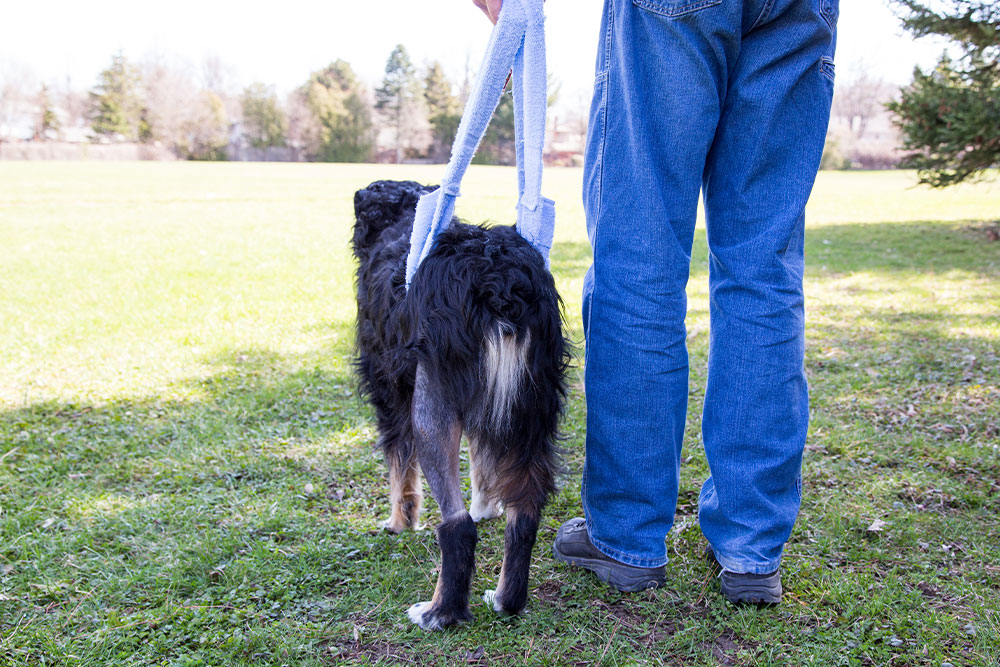
- Indoor surface management: rugs or runners on slick hardwood and tile reduce slipping. Our pharmacy carries lifting harnesses for dogs who need transition help during recovery or in the senior years.
- Weight control: excess weight dramatically increases the risk of injury to the opposite CCL. Lean body condition is one of the highest-impact things pet families can do.
- Preventing high-impact movements: limit jumping, sudden direction changes, and uneven terrain in the early recovery period.
- Warm-ups and cooldowns: gradual transitions in and out of activity reduce strain.
- Joint supplements: omega fatty acids and glucosamine/chondroitin support long-term cartilage health.
Frequently Asked Questions About CCL Injuries
How long after surgery before my dog walks normally?
Most dogs are bearing some weight on the leg within days and walking comfortably within 4 to 6 weeks. Full recovery to pre-injury function typically takes 4 to 6 months. The trajectory is steady but not fast; we check progress at scheduled rechecks.
Will my dog get arthritis even with surgery?
Some arthritis is usually present by the time surgery happens because the joint has been unstable for a period before diagnosis. Surgery slows arthritis progression dramatically compared to untreated injuries, but it doesn’t reverse damage that’s already done. Most surgically treated dogs do well for years; some need ongoing pain management as they age.
Can my dog tear the other CCL?
It’s a real risk. Roughly 40 to 60 percent of dogs who tear one CCL go on to tear the opposite knee within 1 to 2 years. Weight management, controlled conditioning, and avoiding high-impact weekend-warrior activity all reduce the risk. We watch the opposite knee carefully at follow-up exams.
Is there a way to prevent CCL injuries?
Mostly through weight control and conditioning. Keeping your dog lean throughout life, providing consistent moderate exercise (rather than long sedentary stretches punctuated by intense bursts), and avoiding high-impact activities for predisposed breeds all lower risk. Some risk is genetic and conformational and can’t be eliminated entirely. Our wellness visits are a great time to talk about this.
What if my dog gets injured after hours?
We provide emergency care during our open hours, and for true emergencies outside those hours you should head to the nearest 24/7 veterinary ER. In our area, Veterinary Emergency and Specialty Hospital of Wichita handles overnight critical care. For non-emergent lameness that needs evaluation, scheduling with us while we’re open is the right path; for true emergencies after the close of our day, the emergency hospital can stabilize and we coordinate care from there.
Long-Term Joint Health After a CCL Injury
A torn CCL is a frightening diagnosis, but it’s also a fixable one when caught and treated early. Our AAHA-accredited team walks you through the workup, the surgical options, and the recovery plan so the decisions never feel like guesswork. If your dog is limping, slowing down, or has a history that fits this picture, request an appointment and we’ll work through it with you.