
At your pet’s last dental cleaning, everything looked great. Pearly whites, pink gums, fresh breath that did not make you recoil during snuggles. But six months later, there is already visible tartar along the gumline and a smell when they yawn that could strip paint. Unfortunately, this is not unusual. Plaque begins forming within hours of a cleaning, and without consistent home care, it hardens into tartar that only another professional cleaning can remove. The cycle is predictable, but it is also manageable. The right home dental care routine can dramatically extend the time between cleanings and keep your pet’s mouth healthier in between.
At Village Animal Hospital, our approach to care does not stop at the front door, and that includes dental health. As an AAHA-accredited practice, we meet the highest standards for dental care and believe that empowering you with the right tools and knowledge is just as important as the cleaning itself. Request an appointment or contact us to assess your pet’s dental health and build a home care plan that works.
Why Home Dental Care Matters as Much as Professional Cleanings
Periodontal disease begins when plaque, a soft bacterial film, accumulates on tooth surfaces. Left undisturbed for just a few days, plaque mineralizes into calculus (tartar), which irritates gum tissue and triggers progressive inflammation. That inflammation moves from early gingivitis to deeper periodontal infection involving bone loss, painful root exposure, and tooth loss.
The systemic reach of advanced dental disease makes this worth preventing. Bacteria from diseased gums can enter the bloodstream and have been associated with changes in kidney, liver, and cardiac tissue over time. It is genuinely striking how much is happening in a mouth that from the outside just looks like a dog who still really wants to lick your face.
Professional dental cleanings address what has already built up. Home care prevents that buildup from accumulating as quickly. The two work together: neither replaces the other, but daily home care meaningfully extends the value of every professional cleaning, and for many pets it is the difference between a dental every year and one every two or three.
Our wellness care visits include dental assessments that establish where your pet’s mouth is starting and what level of home care would make the most difference.
Brushing: The Most Effective Option
Why Mechanical Removal Wins
Toothbrushing physically disrupts bacterial biofilm before it can mineralize. No other home care method matches it for effectiveness. Daily brushing provides the highest protection; every-couple-of-days brushing still delivers real benefit. Consistency over perfection is the right mindset. Two minutes three nights a week over a year produces far better results than a goal of daily brushing that falls apart after two weeks because the bar was set too high.
Building a Brushing Habit Step by Step
The introduction is where most brushing routines succeed or fail. Rushing creates negative associations that are very difficult to reverse. Remember, your pet has no idea why you are suddenly interested in their mouth. From their perspective, a toothbrush appearing out of nowhere looks like a deeply confusing turn of events, so giving them time to adjust pays off.
- Begin with touch: Spend several days touching the muzzle and lifting the lips, offering a treat after each brief session
- Add the finger: Run a finger along the outer gum line so the sensation becomes familiar
- Introduce flavor: Place a small amount of pet-safe toothpaste on a fingertip and allow tasting
- Introduce a brush: Start with a CET Fingerbrush or soft-bristled brush, beginning at the front teeth
- Extend gradually: Work further back over days or weeks
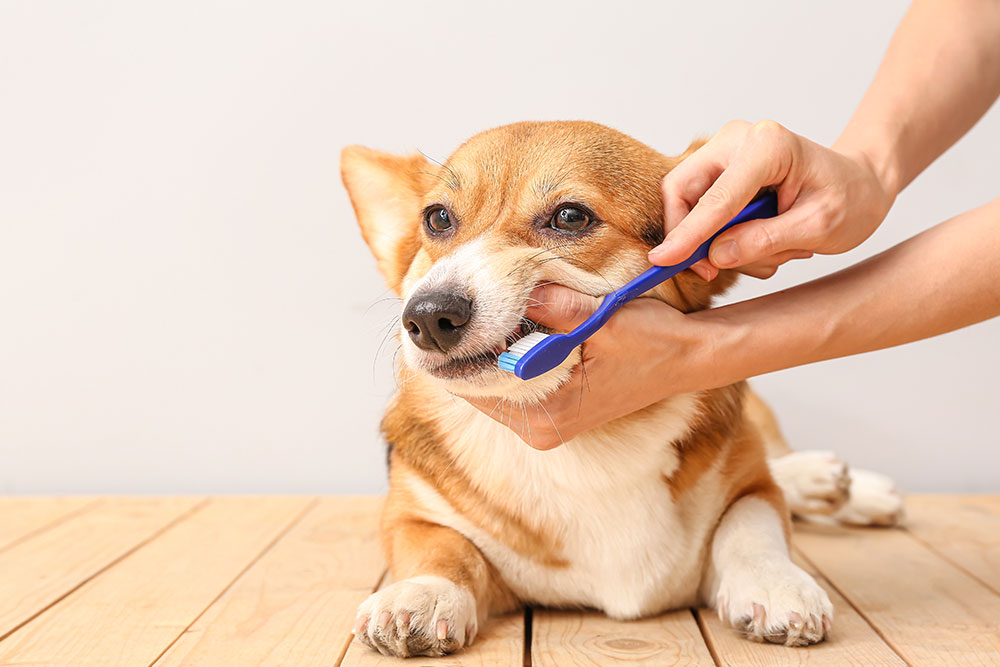
For dogs, hold the brush at a 45-degree angle toward the gumline and use short circular strokes, focusing on the upper back teeth where tartar accumulates fastest. The front teeth and lower incisors stay cleaner on their own because the tongue naturally sweeps those surfaces throughout the day. You can also skip the inside surfaces entirely; the tongue handles those. This is one of the rare situations where your pet’s tongue is doing some of the work for you.
For cats, shorter sessions with lighter pressure work better. Cats have very clear opinions about things happening near their face, and those opinions are rarely enthusiastic. Keep sessions brief, end on a positive note, and follow up with a treat or play session so the experience gets filed away as tolerable rather than traumatic.
Cooperative care techniques based on positive reinforcement and consent keep sessions short enough to end before resistance builds. CET enzymatic toothpaste comes in pet-friendly flavors including poultry and seafood, because most pets are not exactly lining up for peppermint. Never use human toothpaste: fluoride and xylitol are both toxic to pets. Check out our full range of toothpastes and toothbrushes to find something that works for your pet.
When Brushing Isn’t an Option
Some pets will absolutely not accept a toothbrush, and that is worth respecting rather than fighting. Senior pets with established preferences, cats with strong personal boundaries, and dogs with a history of mouth sensitivity all fall into this category. Good news: you still have options that produce real benefit.
Wipes and Gauze
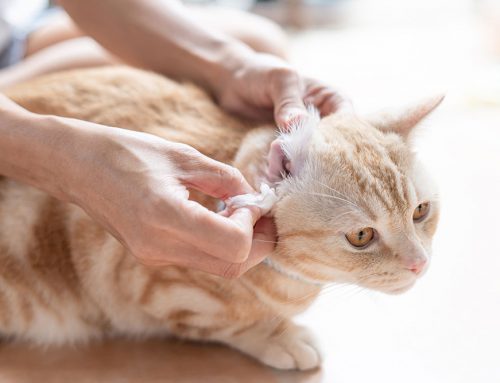
Dental Wipes provide friction-based plaque removal for pets who will not tolerate a brush. They clean accessible outer surfaces effectively and are better than doing nothing. They do not reach gumlines or back molars as well as a brush, but used consistently they provide meaningful benefit and are a realistic long-term option for some pets. A piece of gauze wrapped around a finger with some toothpaste works on the same principle if wipes are not available.
Enzymatic Products
Enzymatic products target bacterial biofilm chemically without requiring scrubbing. Products containing lactoperoxidase enzyme systems can be applied with a finger, a brush, spray, or simply put in food. Vetradent Dental Spray is a great option.
Perio Support Dental Care Powder added to food daily provides enzymatic protection even for pets who resist all direct handling. For the pet who considers their mouth sovereign territory, powder-in-food is sometimes the only available route, and it still helps.
Combining enzymatic products with wipes or brushing produces better outcomes than either approach alone.
Water Additives
Water Additives deliver antimicrobial ingredients passively through every drink, making it the most hands-off option available. It cannot remove tartar that has already formed, but as a daily supplement to other home care it provides meaningful ongoing protection. Introduce at a low concentration first to confirm your pet continues drinking normally. Some pets are deeply suspicious of any change to the water bowl, so ease in gradually rather than dumping a full dose in on day one and wondering why the dog is now trying to drink from the toilet.
Dental Chews, Treats, and Diets
Choosing Safe Chews
Chewing action physically scrapes plaque from tooth surfaces, which means your pet can do some of the daily work themselves while thoroughly enjoying the process. The cardinal safety rule: if pressing your thumbnail firmly into the chew does not leave a dent, it is hard enough to fracture a tooth. Antlers, hooves, bones, and hard nylon products all fail this test, and fractured teeth from these products are one of the most common reasons we recommend extractions. Dog dental chews and treats that soften during chewing provide plaque removal without fracture risk.
Match chew size to your pet’s body weight, supervise initial sessions with any new product, and retire anything that has been chewed to a size that could be swallowed whole.
Greenies Dental Treats for Cats and ProDen DentalCare Bites for Cats provide cat-appropriate dental chewing options, since the feline crowd tends to be deeply offended by anything sized for a dog.
Dental Diets
Dental diets are formulated with a larger kibble structure that requires teeth to penetrate before crumbling, producing mild abrasive cleaning with every bite. Some include ingredients that bind calcium and reduce tartar mineralization. Our pharmacy carries dog dental diets and cat dental diets for pets whose oral health would benefit from this approach.
The VOHC Seal
The VOHC seal from the Veterinary Oral Health Council identifies products that have demonstrated measurable plaque or tartar reduction in controlled studies. It’s a reliable marker when evaluating dental chews, water additives, wipes, and diets. Not every effective product carries the seal, but its presence confirms the claims have actually been tested rather than stamped on the bag by a marketing team. Browse cat dental products and dog dental products in our pharmacy for the full range of vet-trusted options.
What Professional Cleanings Do That Home Care Cannot
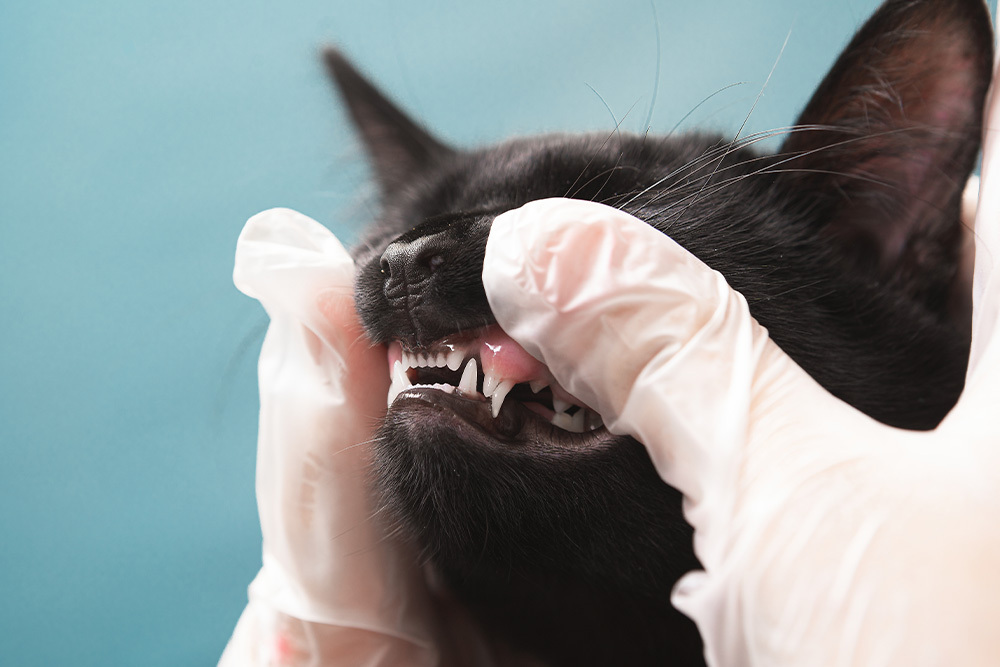
Tartar that has already hardened onto teeth cannot be removed at home, no matter how devoted your brushing routine is. Subgingival disease (infection and bone loss below the gumline) is not accessible without anesthesia. Anesthesia-free dental risks are significant: these procedures only address visible surfaces and provide no access to the diagnostic imaging that reveals root and bone pathology, which is where most serious dental disease actually lives. A mouth can look perfectly clean on the surface while significant infection is hidden below.
Proper anesthesia allows complete cleaning, full-mouth radiographs, and probing of every pocket. At Village Animal Hospital, every dental procedure includes pre-anesthetic evaluation, tailored anesthetic protocols, and close monitoring throughout recovery. AAHA-accredited practices like ours are evaluated against the specific dental care standards established through the accreditation process. Good home care earns longer intervals between those professional appointments; it doesn’t make them optional.
Making the Routine Stick
The most effective dental routine is the one that fits into real life. Pairing dental care with an existing daily habit, such as after the evening walk or before lights out, improves consistency. Keep supplies visible and accessible; a toothbrush buried in the back of a drawer gets used exactly once and then forgotten for six months.
Practical troubleshooting:
- If brushing is too much friction: back up to a fingerbrush or wipes and rebuild slowly
- On days when brushing is not possible: dental powder in food or a water additive still contributes
- If your pet clamps down the moment they see the brush: a lick of toothpaste from a finger still delivers enzymatic benefit
- Track your pet’s breath quality and gum color informally between vet visits
Any consistent home care effort is producing benefit, even when the routine does not look perfect. Progress beats perfection.
Frequently Asked Questions
How quickly does tartar form after a cleaning?
Plaque begins forming within hours. Without disruption, it can calcify into tartar in as little as 24 to 72 hours. Daily brushing prevents that accumulation from building up between professional cleanings.
My cat won’t let me near their mouth. What can I actually do?
Wipes, dental powder added to food, dental treats, and a water additive are all viable options. The combination of multiple partial approaches often produces meaningful protection even when brushing is not possible. Ask our team for guidance on what’s most realistic for your cat’s tolerance.
How do I know if my pet needs a dental cleaning?
Visible tartar, red gumline, bad breath, or dropping food are all signs, though some pets hide dental pain very well right up until the moment they stop eating. Our dental assessments at wellness visits catch problems before visible signs develop.
Is bad breath really a medical concern?
Yes. Persistent bad breath in dogs and cats is almost always caused by bacteria associated with dental disease, not by “just the way they smell.” If your pet’s breath has changed noticeably, that’s a meaningful clinical sign worth evaluating.
Caring That Keeps Going Between Visits
Village Animal Hospital’s commitment to limitless care means the help we provide doesn’t end when you leave. Our dental care services and home care guidance work together to keep your pet’s mouth as healthy as possible across every stage of their life.
Request an appointment for a dental health assessment and a home care plan matched to your pet’s current needs and your family’s busy life.