
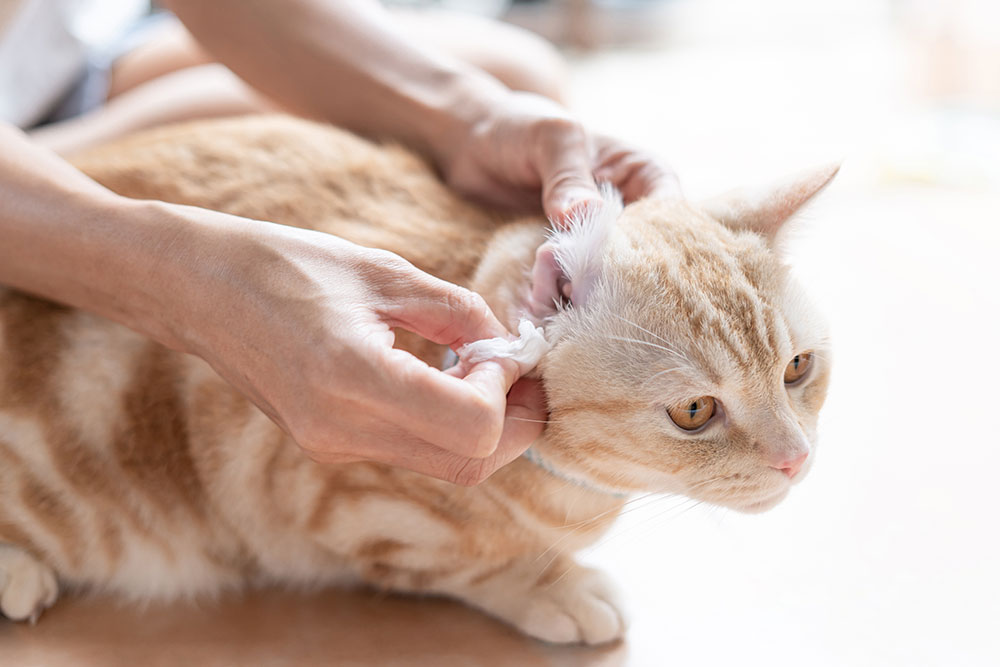
Most dogs and cats do well with a quick ear check about once a week, while cleaning is needed far less often than many families assume, monthly for some pets and hardly ever for others. Floppy-eared breeds, swimmers, and allergy-prone pets sit at the check-more-often end of the range, while most cats keep their own ears nearly spotless. The habit matters more than the technique, because a familiar weekly look is what makes a subtle change in color, smell, or debris obvious the day it appears, and over-cleaning a healthy ear or using the wrong product can create the exact irritation you are trying to prevent.
Handing you the tools is half of what we do at Village Animal Hospital, because our whole approach to care is built on sending you home with the knowledge to feel confident, not just a bottle and a bill. During a wellness visit for your dog or cat in Wichita, we can show you what healthy looks like on your pet’s ears, walk through a low-stress way to check them, and settle on a cleaning frequency that fits their breed and lifestyle. If a check ever turns up swelling, debris, or a sour smell, an ear swab examined under the microscope in our in-house lab shows us whether yeast, bacteria, or ear mites are at work. Give us a call and we will help you build the check into a routine your pet barely notices.
Ear Checks in Thirty Seconds
- A quick weekly look inside the ears, checking color, smell, moisture, and debris, catches most problems long before they turn painful or expensive.
- Cleaning is a separate job from checking: a healthy ear that looks and smells fine usually needs no cleaner at all, and over-cleaning does more harm than good.
- Head shaking, a sour odor, redness, dark discharge, or pain around the ears means it’s time for an exam, not a home flush.
- Floppy-eared dogs, allergy-prone pets, and enthusiastic swimmers need closer monitoring, while most cats groom their own ears nearly spotless.
Why Bother Checking Ears That Look Fine?
A weekly ear check is worth the thirty seconds because ear problems build quietly, and a familiar baseline is what lets you spot a change on day one instead of week three. An infection caught at the first hint of redness is a quick fix; the same infection three weeks in means a painful ear, a longer course of treatment, and a pet who remembers the whole ordeal.
The trick is making the handling pleasant rather than a wrestling match. Building cooperative care into everyday handling, pairing gentle ear touches with treats and stopping before your pet grows anxious, turns the weekly check into something most dogs and cats accept rather than dread. Start young if you can. A puppy or kitten who learns that ear handling means chicken grows into an adult who lifts their head for it. And if your pet already panics at ear handling, our behavioral counseling can help you rebuild that trust step by step rather than fighting the same battle every week.
Why Do Dog and Cat Ears Get Into So Much Trouble?
Dog and cat ear canals bend in an L-shape, dropping down and then turning inward toward the eardrum, and that clever design is also the problem: it traps moisture, wax, and debris in a warm, dark pocket where yeast and bacteria are happy to move in.
A few features tip the odds toward trouble, and a pet can have more than one:
- Floppy ears: Breeds whose ear flaps hang down, like spaniels, hounds, and many doodles, get far less airflow into the canal, so it stays humid.
- Hairy canals: Some breeds grow hair right inside the canal, which traps moisture and catches foreign material like grass awns.
- Narrow canals: A naturally tight canal holds onto wax instead of letting it work its way out.
- Allergy-prone skin: The skin lining the ear is skin, so a pet with allergies often has itchy, inflamed ears as part of the same picture.
Many recurring ear problems are allergy flare-ups playing out inside the ear canal, which is why an itchy, inflamed ear that keeps returning despite careful cleaning usually points to a sensitivity that needs managing rather than a hygiene problem. At a wellness exam we look at your pet’s specific ear shape, coat, and history, then tailor the care plan to what they’re built like.
What Ear Symptoms Mean I Should Call the Vet?
Head shaking, scratching or pawing at the ears, a strong or sour smell, redness, swelling, or dark discharge all mean it’s time for an exam rather than a wait-and-see week. Pain is the loudest signal: a yelp when you touch the ear, or a pet who suddenly guards their head, has moved past minor irritation.
Here’s the shortlist worth acting on:
- Head shaking or a persistent head tilt that doesn’t settle in a few minutes.
- Scratching, pawing, or rubbing the ear along the carpet or furniture.
- Odor, especially a sour or yeasty smell you notice from a foot away.
- Discharge that’s brown, yellow, waxy, or bloody.
- Redness, swelling, or warmth on the flap or down in the canal.
- Pain, whining, or flinching when the ear is handled.
If your pet shows concerning ear signs, we handle urgent care during our regular hours, so you don’t have to guess whether it can wait until next week.
How Often Should I Inspect and Clean My Pet’s Ears?
Nearly every pet does well with a weekly visual check, while cleaning is a separate and far less frequent job, ranging from every few weeks for a swimmer or allergy dog down to almost never for a healthy cat. The rule of thumb: check often, clean only when there’s a reason to.
| Task | How often | What you’re doing |
| Inspect | Weekly for most pets | A quick look and sniff for color, odor, moisture, and debris |
| Clean (healthy ear) | Only as needed, often every few weeks or after water | Removing visible debris with an approved cleaner |
| Clean (swimmer or allergy-prone) | More often, guided by your vet | Staying ahead of moisture and inflammation |
| Clean (healthy cat) | Rarely, if ever | Cats groom their own ears effectively |
If everything looks clean, pink, and odor-free, leave it alone. Over-cleaning strips the protective wax layer, dries the canal, and can trigger the very irritation you were trying to avoid.
Which Pets Need Extra Ear Monitoring?
Dogs with seasonal allergies, breeds with heavy hanging ear flaps, pets who swim or bathe often, and any pet with a past ear infection all warrant closer attention than the once-a-week baseline, because a history of one infection makes the next one more likely.
The right plan for an allergy-prone retriever who swims all summer looks nothing like the plan for an indoor cat, so we set the frequency together as part of your pet’s wellness care, based on lifestyle, anatomy, and what their ears have done in the past. When a pattern of infections points to an underlying allergy or another driver, a diagnostic workup helps us find the root cause instead of treating the same flare-up on repeat.
When Should I Never Clean My Pet’s Ears at Home?
An ear that’s actively infected, painful, bleeding, crusting, or paired with sudden disorientation or a head tilt should be seen, not flushed. Knowing when not to clean ears matters as much as knowing how: home cleaning in those cases can push infection deeper or damage a compromised eardrum.
The redness, discharge, and constant head-shaking that mark an active infection have a name, otitis externa. You also can’t see whether the eardrum is intact. Once infection pushes past the eardrum into the middle and inner ear as otitis media and interna, a pet can develop a head tilt, loss of balance, and permanent damage. When you see these signs, the safe move is to schedule an exam rather than reach for a bottle. An infected ear genuinely hurts, so treatment includes keeping your pet comfortable through our pain management options while it heals, not just clearing the infection.
What’s the Right Way to Clean My Pet’s Ears?
Once your vet has given the go-ahead on a healthy ear, good cleaning is calm, gentle, and quick. The step-by-step for cleaning your dog’s ears:
- Settle your pet outside or in a room that can get messy
- Gather treats to reward them after each ear
- Fill the canal with a generous squirt of an approved cleaner
- Massage the base of the ear firmly enough to hear a squishing noise, but gently enough not to be painful
- Let them shake, and wipe away what surfaces
The massage is what loosens debris deep in the canal and the head shake is what brings it up to where a cotton ball can reach it.
A few points make or break it:
- Handle the ears frequently: If the only time you touch the ears is to clean, they’ll remember that. Make a habit of handling the ears and rewarding them for good behavior during your weekly checks.
- Set the mood: A quiet room and a handful of treats turn cleaning into a routine your pet tolerates instead of resents.
- Never go into the canal with a swab: A cotton-tipped swab packs debris down and can injure the eardrum. Cotton balls or soft pads only, on what you can reach.
- Stop if they resist: Pain or real distress is a signal to pause and check in with us, not push through.
Cats play by different rules. Cleaning your cat’s ears calls for an even lighter touch and happens far less often. If your cat’s ears look dirty, that itself is worth a call. We’re glad to demonstrate the whole technique on your own pet during a visit so you feel confident at home.
Why Isn’t Every Ear Cleaner Safe to Use?
Many over-the-counter and home-remedy cleaners contain ingredients that sting inflamed tissue, burn the canal, or turn toxic if the eardrum is ruptured, which is why the right product depends on what a vet finds inside the ear.
Watch out for these:
- Harsh active ingredients: Alcohol, hydrogen peroxide, and vinegar all sting raw skin and can worsen inflammation instead of soothing it.
- Essential oils and “natural” blends: Appealing labels and the word natural don’t make them safe, and several common oils are irritating or toxic to pets even in small amounts.
- Anything made for people: Human ear products are formulated for human ears and are never the right call for a dog or cat.
Safe cleaners are pH-balanced for pets and use gentle surfactants or drying agents that lift debris without harming tissue. Choosing between them often comes down to your pet’s health conditions and ear cytology, the swab test that identifies which organism is growing and therefore which product will address it. Before you buy an ear cleaner, ask us which product fits.
How Do I Keep Water Out of My Pet’s Ears?
The fix is simple: dry the ears promptly after every swim or bath and give the canal a chance to air out. Towel-dry the ear flap after water and use a veterinary drying solution when needed, since removing water from a dog’s ear promptly keeps the canal from staying damp long enough for microbes to take hold.
For pets who live in the water all summer, a routine of drying after each session, plus a snug-fitting protective option for some, can head off the seasonal flare-up before it starts. Wichita’s humid stretches keep everything damper for longer, and heavy-flapped breeds hold that moisture longest, so a swimmer’s ears deserve their closest attention in the muggy months.
What Does a Professional Ear Exam Actually Find?
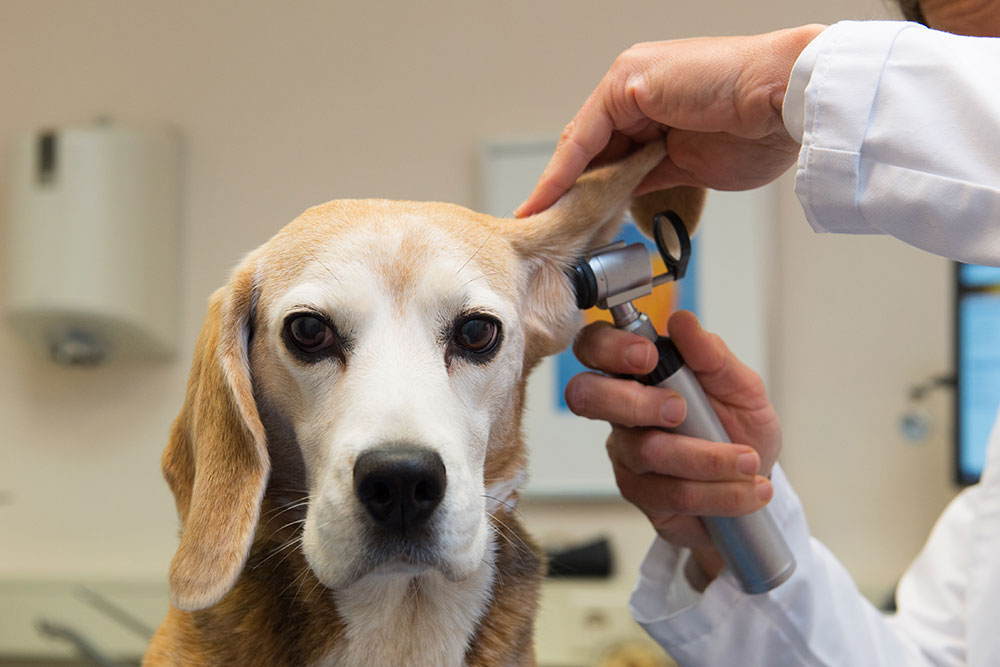
A professional ear exam reaches places you can’t see or safely access at home, using an otoscope to look deep into the canal, checking the eardrum, reading the pattern of any discharge, and running cytology when infection is suspected. It’s the difference between guessing at a bottle and knowing exactly what’s growing.
Allergies, a lodged grass awn or other foreign object, a benign ear polyp, or a hormonal condition like hypothyroidism or Cushing’s disease can all keep ears inflamed no matter how carefully you clean, and treating the root problem is what finally breaks the cycle. When we suspect an infection, in-house lab work gives us real-time results, so treatment can start before you leave. Our AAHA accreditation holds that workup to the highest standard, so a recurring ear problem gets a real answer rather than another round of the same cleaner.
Your Pet Ear Care Questions, Answered
How much ear wax is normal?
A little wax is healthy and even protective. Most dog and cat ears carry a small amount of pale to light-brown wax, and that’s nothing to chase with a cotton ball. What’s worth a closer look is a change from your pet’s usual: a sudden increase, a shift to dark brown or black, a coffee-ground texture, or wax that comes with odor or redness.
Can I use cotton swabs if I’m careful?
Cotton swabs are best kept out of the canal entirely, no matter how careful you are. They tend to push debris deeper toward the eardrum rather than remove it, and a sudden head shake at the wrong moment can drive the tip into sensitive tissue. Stick to cotton balls or soft pads on what you can see and reach, and leave anything deeper to an exam, where we can see what we’re doing.
My pet keeps getting ear infections. What am I doing wrong?
Usually nothing you’re doing at home is the problem, because recurring infections are far more often a sign of an underlying driver, most commonly allergies, than a sign you’re cleaning wrong. The better path is a workup that looks for what’s fueling the pattern, whether that’s a food or environmental allergy, an anatomy issue, or a hormonal condition, so we can manage the source and give those ears a real break.
Building an Ear Care Routine That Fits Your Pet
Recurring ear trouble can feel like a chore that never ends, but a weekly check, cleaning only when there’s a reason to, and a professional eye on the stubborn cases is a plan that keeps most pets comfortable. You don’t have to sort out the right frequency or the right cleaner alone; walking that road with you is the whole point of how we practice. When you’re ready, book a wellness appointment at Village Animal Hospital in Wichita and we’ll build a schedule that fits your pet’s breed, lifestyle, and history. Our veterinarians will keep it tuned as your pet’s ears change over the years.