


Bee Stings, Pollen, Vaccines, and Food: What to Do If Your Pet Has An Allergic Reaction
From a Sting on the Trail to a Full Emergency: Allergic Reactions in Pets
Most pet owners do not think carefully about allergic reactions until they are already in the middle of one, standing somewhere with a racing heart watching their dog’s face change after something stung them on a walk, or arriving home to find a cat who ate something new and is clearly not okay. That gap between knowing what to do and guessing feels enormous in those moments, and having a proactive approach is the only way to close that gap.
Skin itchiness and anaphylaxis both stem from an immune system that is overreacting, but they call for very different responses. Hives and skin inflammation can often be managed with medication and monitoring. Anaphylaxis requires emergency care without hesitation. The problem is that in the first minutes, both can look similar, and the wrong call has real consequences.
Village Animal Hospital in Wichita is an AAHA-accredited practice built around the philosophy of “Limitless Care”, meaning our care for your pet does not stop when you walk out the door. We take time to make sure you leave each visit with the knowledge and framework to handle what comes next. We offer emergency treatments during regular business hours, and can refer you to trusted partners for after-hours care. Contact us at 316-689-0202 to talk through your pet’s history and create an allergy plan today.
What Triggers Allergic Reactions in Dogs and Cats?
In pets with allergies, the immune system misidentifies harmless substances as dangerous and launches a response that ranges from mild skin irritation to a full systemic emergency. Knowing which triggers are most relevant to your pet helps you build better habits and catch patterns before they escalate.
Environmental allergens are among the most common causes of allergic disease in dogs and cats. Kansas sits in the heart of the country’s most significant ragweed belt, and spring tree pollens, summer grasses, and mold spores add to a substantial year-round burden. Pets who show seasonal patterns in symptoms, more scratching in fall or recurring ear infections every summer, are often reacting to exactly these environmental factors.
Insect bites and stings are another significant trigger, especially for outdoor dogs. Bee and wasp stings can cause reactions ranging from mild localized swelling to collapse. Flea saliva deserves particular mention because a single bite in a sensitized animal can trigger widespread, intense itching that persists for days.
Food proteins such as chicken, beef, dairy, wheat, and eggs cause year-round skin and GI reactions that do not follow seasonal patterns, which distinguishes them from environmental causes.
Medications and vaccines are less common but real triggers worth discussing separately.
Our diagnostics, including in-house laboratory capabilities and digital radiology, support a thorough workup when trigger identification requires more than a history review.
Can Vaccines or Medications Cause Allergic Reactions?
Yes, though they are among the less common triggers. Vaccination reactions range from mild and temporary, including fatigue, injection-site soreness, and low-grade fever, to more significant responses developing within the first hour after administration. Some reactions appear up to 48 hours later, which is why the monitoring window is broader than many owners expect.
For pets with a prior reaction history, premedication with antihistamines before vaccination is sometimes appropriate and is determined individually. Sharing a complete medical and reaction history with our team before each appointment allows protocols to be adjusted and the schedule tailored to reduce risk. As an AAHA-accredited practice, we maintain rigorous documentation standards that make that history accessible at every subsequent visit. Our wellness care visits are the right starting point for these conversations.
What Is the Difference Between a Mild Allergic Reaction and a Life-Threatening One?
The Spectrum From Hives to Anaphylaxis: Where Does Your Pet Fall?
Not every allergic reaction is a crisis. The critical variable is how quickly symptoms develop and how many body systems they involve.
Mild to Moderate Reactions
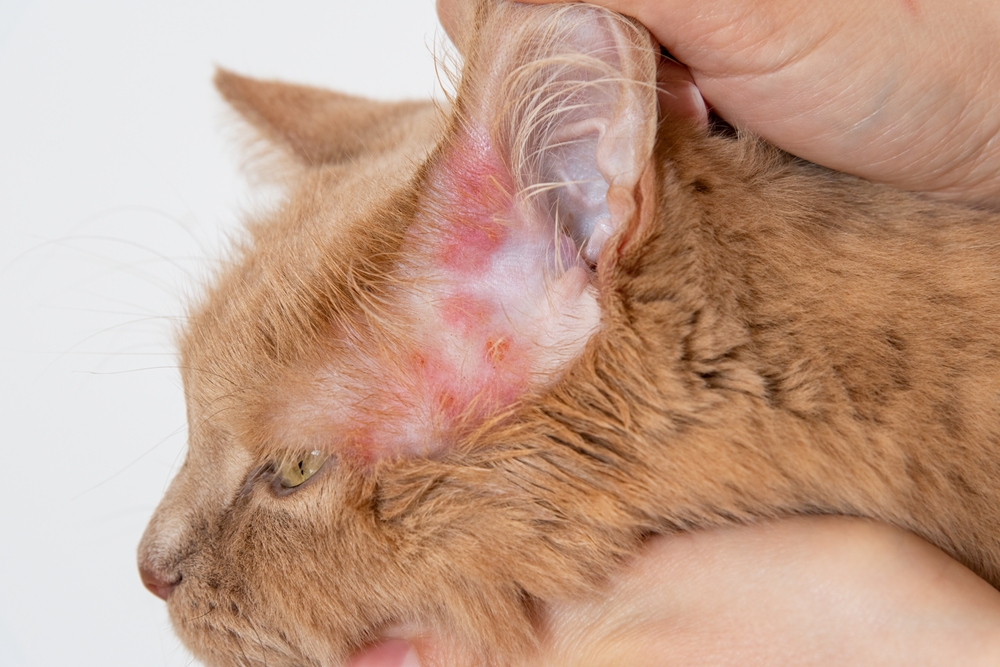
Some reactions stay at the skin level without progressing further. Pets with contact hypersensitivity or chronic environmental allergies often show persistent itching of the paws, ears, and hindquarters, with repeated licking and scratching leading to hotspots and secondary infections if left unmanaged. Hives, called urticaria in veterinary medicine, are raised, firm welts that appear most commonly on the face, neck, and back. They are uncomfortable and warrant veterinary contact to identify the trigger, but they represent a skin-level response rather than a system-wide event. Respiratory allergies that cause sneezing, coughing, or watery eyes tend to progress gradually and allow more time to assess.
Severe or Emergency Allergic Reactions
Anaphylaxis in dogs is a sudden, whole-body immune response involving rapid blood pressure collapse, airway constriction, and impaired oxygen delivery to vital organs. It can progress from early signs to life-threatening instability within minutes. Cats present differently: anaphylaxis in cats most commonly involves severe respiratory distress and GI signs, and because cats are skilled at masking discomfort, the window between subtle signs and serious compromise can be narrow. Simultaneous involvement of multiple body systems, skin changes plus vomiting, or breathing difficulty plus weakness, always warrants treating the situation as urgent. We manage allergic emergencies in-house during business hours. For after-hours emergencies, Veterinary Emergency and Specialty Hospital of Wichita operates 24/7, and our emergency page has that contact information ready for you.
How Do You Know Whether a Reaction Requires Emergency Care?
Monitoring vs. Moving: A Practical Guide to Allergy Symptoms
One of the things our team believes in is helping owners understand not just what is happening, but what it means for their specific next step. Allergic reaction signs fall into two distinct groups.
Signs that warrant a call and prompt evaluation, but not necessarily panic:
- Facial swelling around the muzzle, eyes, or ears that is present but not spreading rapidly
- Sudden intense scratching, licking, or pawing at the face
- Raised, firm bumps appearing on the skin
- Red, watery, or squinting eyes
- Vomiting or diarrhea developing within an hour or two of a new food or exposure
- Restlessness or behavioral agitation without another obvious explanation
These allergy symptoms are worth monitoring closely and often require same-day veterinary care, but they do not always indicate a crisis in the first minutes.
Signs that require immediate action, no waiting:
- Labored, rapid, or audible breathing
- Open-mouth breathing in cats, which is always abnormal and signals respiratory distress
- Collapse or sudden inability to support their own weight
- Pale, white, or blue-tinged gums
- Swelling that is spreading toward the throat or neck in real time
- Vomiting or diarrhea continuing for more than an hour
- Weak, racing, or irregular pulse
Checking gum color takes seconds. Lift the lip gently and look. Pink and moist is normal. Pale, white, or blue indicates inadequate circulation and always requires immediate care. If your pet is showing emergency signs during clinic hours, call 316-689-0202 so our team can prepare. If it is after hours, head directly to Veterinary Emergency and Specialty Hospital of Wichita.
What Should You Do at Home While You Get Your Pet to Care?
Taking purposeful steps in the first few minutes makes a real difference. Here is a practical sequence while you arrange veterinary care:
- Remove the triggerif you can identify it. If skin contact with a substance is suspected, rinse the area with cool water. Avoid applying soaps or products unless our team advises it.
- Keep your pet still and calm.Physical activity increases circulation and can move allergens through the body more quickly. Carry small pets rather than walking them to the car.
- Prevent self-injury.If scratching is intense, a cone or e-collar reduces skin damage during transport.
- Document what you can.Note the time symptoms started, any new foods or products in the preceding hours, and photograph visible swelling or skin changes.
- Do not give human medications without guidance.Many formulations contain decongestants or xylitol that are toxic to pets. Call before giving anything.
If your pet has a documented reaction history, ask us in advance whether keeping a specific antihistamine on hand makes sense. Our wellness care visits are where we build those personalized preparedness conversations.
When Is It a Full Veterinary Emergency?
Head to the clinic or emergency facility right away if:
- Breathing is worsening over the course of minutes, not stabilizing or improving
- Swelling is spreading visibly toward the face, throat, or neck
- Two or more body systems are affected simultaneously
- The pet has collapsed or lost the ability to stand
- Symptoms are continuing or escalating despite removing the known trigger
How Are Emergency Allergic Reactions Treated?
Emergency treatment for anaphylaxis involves epinephrine to interrupt the immune cascade, intravenous fluids to restore blood pressure, anti-inflammatory medications, and oxygen support for respiratory compromise. Our in-house capabilities and AAHA-standard monitoring allow us to manage acute reactions directly during business hours. For cases requiring overnight monitoring, Veterinary Emergency and Specialty Hospital of Wichita ensures continuity of care.
One important consideration after any significant reaction is the possibility of a biphasic reaction, meaning a return of symptoms hours after the initial reaction appeared to resolve. This is why monitoring continues well past the moment a pet looks stable.
How Can You Reduce the Risk of Future Reactions?
Prevention works best when it is consistent, proactive, and personalized to a specific pet’s triggers and history.
Grooming and Skin Care
Regular grooming lowers the allergen burden a pet carries between baths. Rinsing after outdoor time during Wichita’s high-pollen seasons removes environmental debris before it is ingested through grooming. For pets with reactive skin, we carry products including DOUXO S3 CALM Shampoo, DOUXO S3 CALM Mousse, Aloe and Oatmeal Shampoo, Aloe and Oatmeal Conditioner, Relief Shampoo, and Relief Spray to support sensitive skin between visits. Topical therapies for allergic skin used consistently support the skin barrier and help reduce the frequency and severity of flares over time.
Parasite Control
Flea allergy dermatitis is driven by flea saliva, not flea numbers, meaning a single bite causes a significant reaction in sensitized pets. Year-round parasite prevention is essential, not seasonal. Our pharmacy carries dog flea and tick prevention and cat flea and tick prevention to keep protection consistent through every season.
Medical Management
For pets with a history of severe reactions to stings, keeping epinephrine at home is worth discussing with us. For longer-term management of environmental allergies, immunotherapy through graduated allergen exposure is the most effective option for reducing reaction frequency over time. For active flares, Apoquel and Cytopoint are both effective, well-tolerated options. We assess each patient individually based on their history, age, and reaction pattern.
What Home Changes Actually Help With Food and Environmental Allergies?
For food allergy investigation, elimination diet trials are the only reliable diagnostic method. A novel protein or hydrolyzed diet is fed exclusively for eight to twelve weeks with zero exceptions. If symptoms improve during the trial and return when the original food is reintroduced, food allergy is confirmed. Our team provides nutritional counseling to identify the right trial diet for each patient.
Environmental management includes HEPA vacuuming, weekly hot-water laundering of pet bedding, and maintaining indoor humidity between 30 and 50 percent. In Wichita, spring storms push indoor humidity sharply upward, making dehumidification during those periods a practical seasonal step. Allergies frequently affect the ears as a secondary site, so consistent ear cleaning with a veterinary-approved solution helps prevent the secondary infections that develop readily in allergy-prone pets.
Frequently Asked Questions About Allergic Reactions in Pets
What is the difference between hives and anaphylaxis?
Hives are raised, itchy welts caused by a localized immune response. Uncomfortable and worth addressing, but not immediately life-threatening. Anaphylaxis is a sudden, whole-body reaction involving blood pressure collapse and airway constriction that can be fatal without prompt treatment. The difference lies in how many body systems are involved and how quickly the situation is progressing.
How do I know when to call the clinic versus going directly to emergency care?
Call us during business hours for guidance on hives, mild itching, or GI signs that are not rapidly worsening. Head directly to Veterinary Emergency and Specialty Hospital of Wichita after hours, or if you are seeing breathing difficulty, pale or blue gums, collapse, or spreading facial swelling at any time. Reach out before giving any medications at home.
Can I give my pet a human antihistamine at home during a reaction?
Not without checking with us first. Many over-the-counter formulations contain decongestants or xylitol that are toxic to pets. If your pet has a documented reaction history, ask us during a wellness visit whether having a specific antihistamine on hand makes sense before you ever need it.
How do I prevent flea-related allergic reactions?
Consistent year-round flea prevention is the most reliable approach, since flea allergy dermatitis can be triggered by a single bite. In Kansas, flea populations can persist indoors well into winter once established, so continuous prevention is more effective than seasonal.
Could my pet have a food allergy?
Possibly. Food allergies produce year-round skin and GI symptoms rather than seasonal ones. Confirming them requires a strict elimination diet trial lasting eight to twelve weeks. Chat with our team about the right trial diet for your pet’s history.
Prepared, Not Just Treated: Our Approach to Allergy Care
Allergic reactions deserve prompt attention regardless of initial severity, because situations that start as hives can sometimes escalate. The warning signs that demand immediate action are rapidly spreading facial swelling, worsening breathing, pale or blue gums, and collapse. If you are seeing any of those, do not wait.
For ongoing allergy management, we are built to be a genuine partner. From trigger identification and diagnostic workups to prevention planning, medication selection, and follow-up care, the goal is always to make sure you leave knowing what you are dealing with and what comes next.
Request an appointment to schedule an evaluation, or contact us at 316-689-0202 any time you have questions.




Leave A Comment